
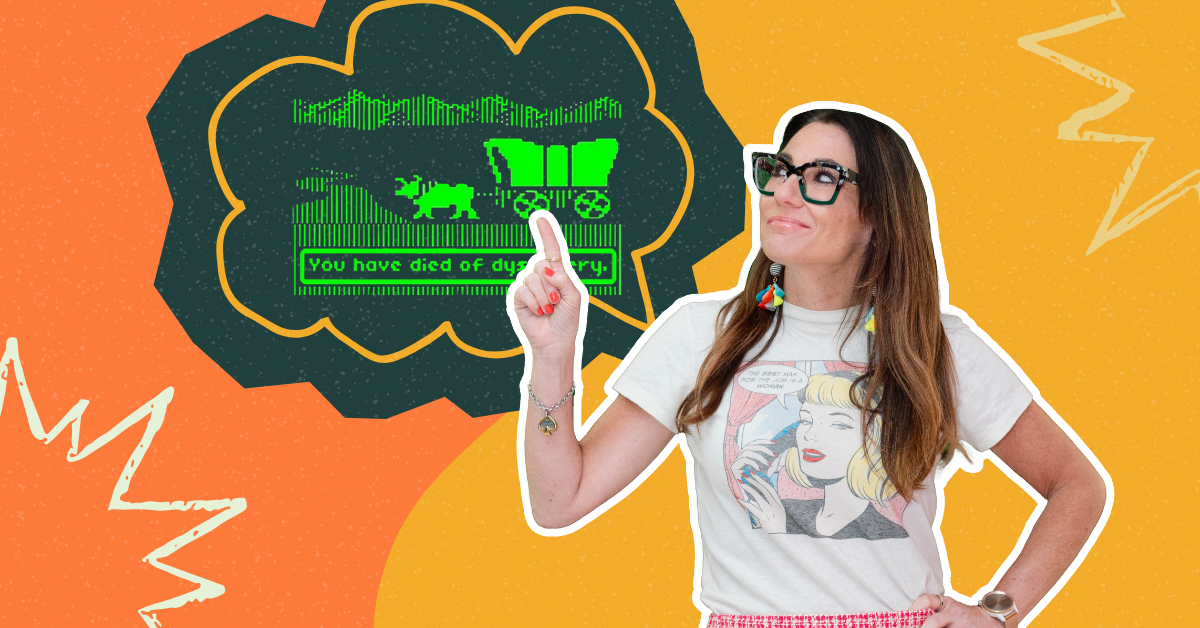
Remember Home Ec? I do. One hour of my day in high school where we learned the names of utensils, the difference between a teaspoon and tablespoon, and how to cook meat that wouldn’t kill us. It went the way of The Oregon Trail, replaced by digital whiteboards and iPads that took the solving out of the problem.
Side note on the Oregon Trail: Did anyone ever survive dysentery? Also, the poor oxen, what a way to go.
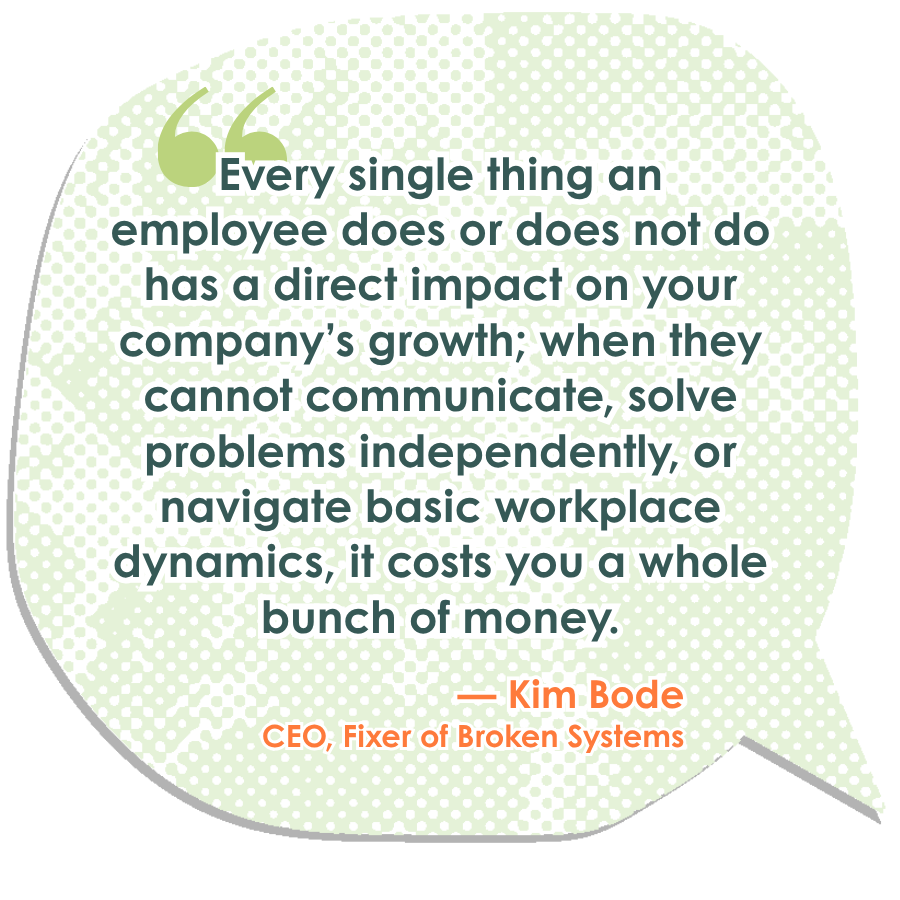
This, along with a host of other things (pandemic, helicopter parents, education system), is why entry-level or early-career professionals are struggling, and employers are fed up. Your people are lacking, or missing entirely, in critical thinking, communication, conflict resolution, problem-solving, and whatever else makes life survivable. It is literally a skill set you develop in your most awkward, cringeworthy, preadolescent years when failure or embarrassment is a daily occurrence.
When these skills are missing, business owners become the default solution for everything, so instead of focusing on growth, strategy, and actually running the company, we end up mired in details and problems that employees should be able to work through on their own.
The Cost of Doing Nothing is One We Can’t Afford
The great thing about entrepreneurs? If the solution doesn’t exist, we’ll create it. So I did; it’s based on 20 years of business ownership, developing and running the Women’s Entrepreneurial Fellowship, and my need to fix the shit impacting my fellow business owners.
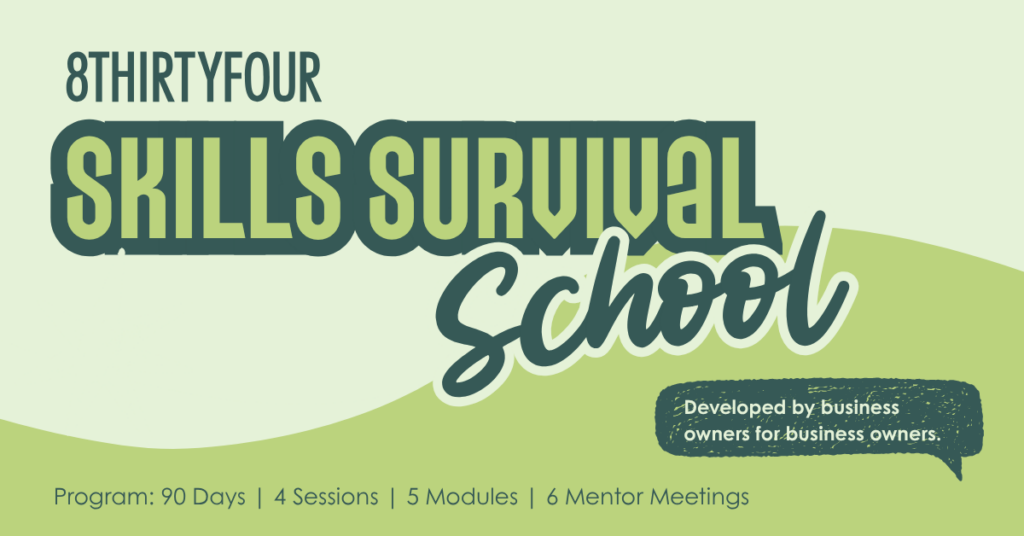
8THIRTYFOUR Skills Survival is schooling for the early-career employee, the struggling one, the one who can’t seem to get out of their own way…and yours. It‘s built the way we approach everything: integrated, because we don’t all comprehend the same way, so why do we default to one-size-fits-all? People need connection, reinforcement, support, and resources.
In-person is community.
eLearning is the reminder.
Self-reflection is required.
And a personal guide ties it all together.
Ninety days, spread out, because no one learns anything sitting for eight hours while someone talks at them about the tenets of communication. Plus, we don’t do boring. Have you met me?
It isn’t workforce development; we’re not developing a force; we’re developing a person. The people who make up terms like this are not the ones on the ground, feeling the impact or cost and they decided to combine work, force, and development into the gold standard, which, to me, reads: forced work equals development.
Our school of thought is simpler: what is needed didn’t exist, so who better to build it than a neurodivergent entrepreneur driven by impact, not profit.
Come see for yourself.